When places rally their capital and networks around local economic development, remarkable progress can occur.
In July 2025, we wrote about the O.H.I.O. Fund (the “Fund”), a capital vehicle focused on investing in place. The Fund is a long-term, multi-sector fund that reinvests in Ohio, largely on behalf of Ohio families, family offices, individuals, and companies. Ninety eight percent of its committed capital comes from Ohio investors.
When the Fund launched, it felt like an exciting, ambitious experiment. Today, it feels like a proof point – well ahead of schedule. At the time, the Fund’s long-term aspiration was to aggregate over $500M in capital in three years; it has now raised over $693M in just over two years (as of September 2026). The Fund has deployed $315 million across 48 investments in companies, real estate, infrastructure, and funds. The Fund has also generated $81 million in returns for its investors.
Meanwhile, Ohio has been named the top state for business by CNBC and has attracted marquee next-generation investments, including Intel’s $28 billion semiconductor complex, Honda and LG’s $4 billion battery plant, and Anduril’s $1 billion Arsenal-1 facility. Ohio’s unusually coherent economic development system has helped create the conditions for these successes.
We previously wrote that the Fund’s “multidimensionality reflects how the economy functions, raising the prospect of catalyzing and benefiting from the ‘flywheel effect’ of disparate investments that fuel each other’s growth.” This thesis appears to be unfolding in earnest.
The Fund’s early results demonstrate the potential to knit together capital, networks, and innovation in a place. We felt it was past time to check in with the Fund’s founding partners, Mark Kvamme and Ray Leach.
The following conversation has been edited and condensed for length and clarity, with Mark and Ray’s responses combined where appropriate.
When we first wrote about the Fund, raising $500 million over three years seemed ambitious. You have blown past that goal. What’s driving the momentum?
Some of it is the Fund itself, but much of it is what has happened in Ohio. The state has undergone a cultural shift over the past decade. The conversation has shifted from a traditional “Rust Belt” narrative to a recognition that Ohio has a remarkable collection of assets: its central geographic location, manufacturing heritage, supply chains, infrastructure, companies, and talent.
COVID and the renewed national focus on domestic manufacturing accelerated economic and investment trends already underway. Assets that might have seemed “old economy” suddenly became highly relevant again. At the same time, Ohio had spent years building institutions and relationships capable of responding to the opportunity.
The Fund has benefited from this macroeconomic and microeconomic progress and momentum, and our investments have also strengthened collective understanding and appreciation of the Fund’s investment thesis. When we were getting started, we were explaining an unproven model. Now there is a portfolio, a track record, and a growing network of investors and companies. People can see the thesis working rather than simply hearing us describe what might happen.
One of the things that intrigued us originally was the decision to invest across sectors and across the entire state. Has that multidimensional thesis held up in practice?
Absolutely. We are investing across Ohio, not just in Columbus, Cleveland, and Cincinnati. The multi-asset structure is a key factor in making that possible. As of September 2026, we have investments in twenty of Ohio’s eighty-eight counties, including many rural communities.
If we were only an early-stage technology fund, our investments would naturally concentrate in a handful of technology ecosystems. If we were only a real estate or growth equity fund, we would see a more limited set of opportunities. By investing across technology, established businesses, real estate, and infrastructure, we can fully leverage the investment opportunities in the world’s 22nd-largest economy. Even Ohioans do not realize that Ohio’s economic size is equivalent to Switzerland’s.
But our priority across all our investments remains generating significant returns for our investors. We are not allocating capital geographically just to check boxes. Every investment must meet our underwriting standards. Our flexibility is intended to expand the universe of good investments we can make, not to relax investment discipline.
One thing that stood out in our conversation was the amount of latent economic potential you are uncovering in established Ohio businesses. Is the opportunity larger than you anticipated?
It is exceeding our expectations.
Companies throughout Ohio have operated successfully for 70, 80, or even 100 years. They have deep technical knowledge, established customers, experienced management teams, and an understanding of their industries that would be extraordinarily difficult to recreate from scratch. In many cases, they also see once-in-a-generation opportunities to grow.
What they have not always had is the capital, structure, or external support to pursue those opportunities aggressively. That is where we can come alongside them. They bring decades of industry expertise; we bring capital, connectivity, and a growth orientation.
That has become especially interesting as advanced technologies collide with traditional industries. Artificial intelligence, robotics, automation, defense technologies, and manufacturing reshoring are making old capabilities newly valuable. The next industrial economy is not necessarily about replacing existing companies. In many cases, it is about combining their knowledge with new technology and capital.
We have seen this firsthand. At Ease Logistics, for example, applying AI has helped translate the founder’s deep logistics expertise into systems that run faster and more efficiently. The company has grown, improved its margins, and gained market share.
Tens of thousands of privately held businesses across the country face some version of this opportunity, particularly as generational transitions accelerate. Capital and the networks that come with it can enable the next generation to transform a company without discarding the accumulated knowledge of the previous generation.
That gets at the “flywheel” idea we wrote about last year. Are you seeing companies and investors within the Fund’s network begin to create value for one another?
Very much so. We now think explicitly about the O.H.I.O. Fund Network — not just the Fund’s investors, but also the growing number of portfolio companies, executives, entrepreneurs, and partners connected through it.
We recently held our first CEO summit, and you could see connections forming that no one could have designed from the top down. Companies from completely different sectors discovered customer relationships, expertise, and opportunities to collaborate. Once you put talented people from different industries in a room, connected by a shared investment network and a shared place, the number of possible combinations grows quickly.
That is the Fund’s human dimension. Capital is the organizing mechanism, but its value extends beyond the check. It includes knowledge, relationships, customers, talent, and connectivity across industries.
It also changes the nature of local capital markets. Historically, many of Ohio’s best opportunities attracted investment from New York, California, Texas, and elsewhere. There is nothing wrong with that capital — we still want to partner with sophisticated national investors. The difference is that meaningful Ohio capital can now participate alongside them.
The goal isn’t to elbow anyone out. It is to ensure Ohio investors can participate in the growth occurring in their own state while helping those companies grow faster.
Much of what you’re describing sounds like the product of decades of institutional building in Ohio. Why has the state been able to develop this collaborative economic culture?
In some ways, it emerged from adversity.
Ohio faced difficult economic decades, and people eventually recognized they couldn’t do everything independently. The state experimented with different models — Third Frontier, JumpStart, CincyTech, Rev1, JobsOhio, and others — and over time, this effort developed an ecosystem that learned to collaborate more effectively across the public, private, philanthropic, and institutional sectors.
That matters. When JobsOhio was getting started, landing a major company required local and state leaders, CEOs, economic development organizations, and others to work together. That kind of collaboration became second nature.
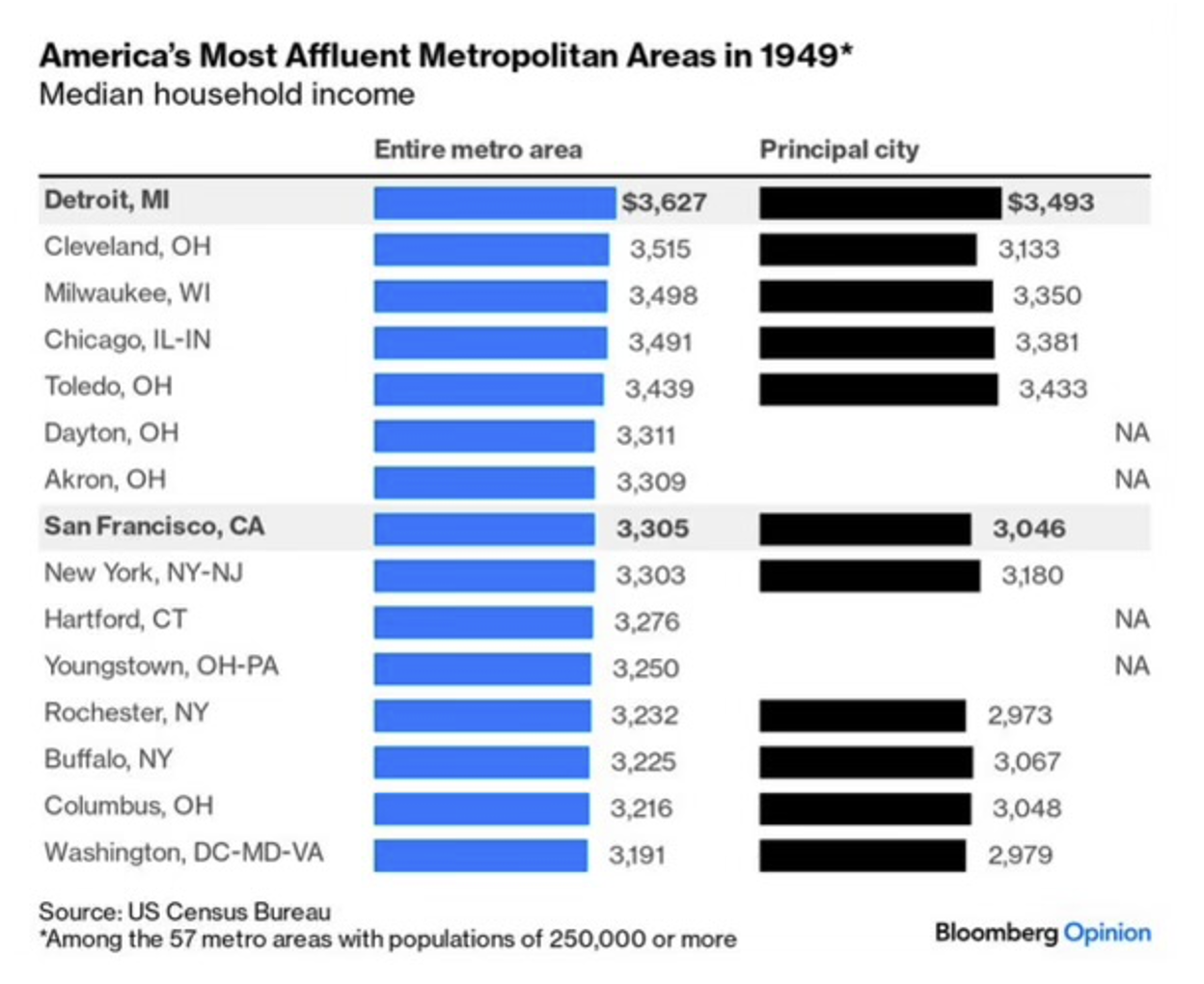
Ohio has long had strong local fiefdoms. In 1949, six of the fifteen most affluent communities in the U.S. were in Ohio (Cleveland, Toledo, Akron, Dayton, Youngstown, and Columbus). But the economy has changed dramatically over the past 77 years, and Ohio communities have come to understand that they need to collaborate more to achieve individual and collective progress.
The connectivity built during that period is paying dividends now. Ohio is in the right place at the right time, but the capacity to capitalize on the moment was built over decades. We don’t view this as a two-year opportunity but rather as a 25-to-50-year opportunity.
Singapore’s Temasek was an important inspiration for the Fund. As the model matures, do you think a place-based investment vehicle like this should ultimately become more closely connected to government or public pension capital, as in Singapore?
There are real opportunities for partnership, but the investment function itself is private for an important reason.
Investing requires picking winners. You have to evaluate opportunities, take risks, say no to things that don’t meet your standards, and move quickly when an opportunity arises. That becomes much harder within a political process.
The investment team needs discretion and accountability for financial returns. At the same time, the public sector can create the conditions that make investments possible, and public institutions can certainly participate as investors when opportunities meet their fiduciary requirements.
One striking thing is how little of the capital controlled by large Ohio institutions is invested in Ohio. The state’s largest public pension funds hold approximately $220 billion, and from what we can tell, about one to two percent of that capital is invested in Ohio projects or companies. We agree it doesn’t make sense to invest locally simply because it is local. But if an Ohio investment can generate competitive risk-adjusted returns, why shouldn’t more locally controlled institutional capital participate in these investments?
The broader point is that economic development needs capital to function. Traditional economic development can identify companies, build infrastructure, develop talent, and help assemble deals. But eventually, someone has to put risk capital into the opportunity. Without that capability, a place operates without an essential tool that can create a much more powerful flywheel effect, in which local investors generate significant returns from local investments.
Other states and regions are now paying attention to what you have built. If someone wanted to create an O.H.I.O. Fund elsewhere, what have you learned are the non-negotiables?
The first is simple: you must be in business to make money. Every investment must be underwritten to a financial objective. The moment the Fund becomes a vehicle for favors, political priorities, or investments that cannot stand on their own economic merits, the model breaks.
Second, the investment team needs genuine discretion. Investors can introduce opportunities — and often do — but the investment team must be able to tell an investor that their deal isn’t good enough.
Third, you need flexibility. From the beginning, we were asked: How can the same fund invest in both technology and real estate? That flexibility has become one of the model’s greatest strengths.
Take 1872 AI, a company founded by three former SpaceX engineers to build a highly automated steel fabrication facility in Cincinnati. They found the right building, but the owner wanted to sell rather than lease it. Because we could invest across asset classes, the Fund could buy the building. It still had to clear our real estate underwriting, so we took warrants in the company alongside the purchase and secured full market terms — none of this was done as a favor. That flexibility bought speed. A traditional venture fund could not necessarily do that. A traditional real estate fund would not necessarily understand why it mattered.
Finally, the people matter enormously. You need investors who understand markets, people who understand economic development and public-private partnerships, and people with trusted relationships across the region. Those capabilities rarely coexist within a single institution.
That makes the model harder to replicate than simply writing a prospectus and raising a fund. But harder does not mean impossible. We are already hearing from people in other states who are interested in doing something similar, and we are happy to share what has worked and what hasn’t.
Is the O.H.I.O. Fund riding Ohio’s economic wave, or helping create it?
It’s probably both.
A set of circumstances in Ohio made this possible, along with infrastructure built over decades that we were fortunate to inherit. But this kind of capital vehicle had never existed here before.
It has been a rare recipe, but that doesn’t mean it has to remain so.
Bruce Katz is the Founder of New Localism Associates and a Senior Advisor to the National Housing Crisis Task Force. Michael Saadine is Managing Partner at Invisible Group, an interdisciplinary built environment investment platform, and a Senior Advisor to the National Housing Crisis Task Force.